WINTER PREP CHECKLISTS ARE MISSING ONE ITEM.
THE LIST
Most winter prep lists look about the same, and yours is probably done. The generator has been serviced and the water is stored. There is a month of food in the pantry, the wood is split and stacked, and the flashlights have fresh batteries in a drawer by the door.
Every item on that list is the right call. Each one took time, money and a few weekends to get in place. You have done more than most households ever will. If the power went out tonight, your first day would be fine, and probably your second. That is a real achievement, and it is worth saying plainly.
Read the list one more time, though. Every line on it is a thing you own. None of them is a skill you know. The generator, the pantry and the woodpile all wait on someone who knows what to do with them once the lights stay off longer than anyone expected.
THE MOMENT
Two recent outages show where the weak point sits. On October 20, 2025, an Amazon Web Services outage took down banking apps, food ordering and smart-home devices for hours. Six months earlier, on April 28, 2025, a blackout in Spain and Portugal stopped card payments and left mobile networks barely working for about ten hours.
Most of what we know how to do now lives on a phone. A phone needs three things to help you: power, signal and someone else's servers staying up. Lose any one of them and the saved video or recipe simply stops loading.
Day one of an outage is usually fine. The house is still warm and dinner is easy. Day two is when you reach for the instructions, for the woodstove or the pantry or the canner, and the phone is at 9%. That small moment is the one the list didn't plan for.
THE LEAK
Even with full power, saved instructions have a shelf life. In May 2024, Pew Research Center reported that 38% of webpages that existed in 2013 were no longer accessible a decade later. Among pages from 2023, 8% were already gone.
None of this is anyone's fault in particular. Sites get sold, hosting lapses, and redesigns break old addresses. The bookmark still sits in your browser, looking exactly as it did, but the page behind it has moved or vanished. Nobody built the internet to keep things. It was built to show the newest version of everything.
There is a quick way to see this for yourself. Open your 20 oldest saved how-to pages and count how many still load. Write the number down on the back of an envelope. Then try the same 20 pages again next winter, before the first storm, and compare. The difference shows you how fast a saved page can go quiet.
THE GAP
Supplies only stretch as far as the know-how to use them. A full pantry goes further when you can cook a real meal on a woodstove. Stored food lasts longer when you know how to keep and preserve it. The house keeps running when you can handle the work without the usual tools.
There is a planning fact worth knowing here. In November 2025, NERC, the North American grid regulator, said much of North America faced elevated risk of supply shortfalls during extreme winter cold. Demand had risen by 20 gigawatts in a single year. It is the same kind of fact you already used when you bought the generator.
A prep list that is ready for day one is a good list. Keep every line on it exactly as it is. Day three just needs one more line at the bottom, for the skills that make the rest of the list work.
THE FIX
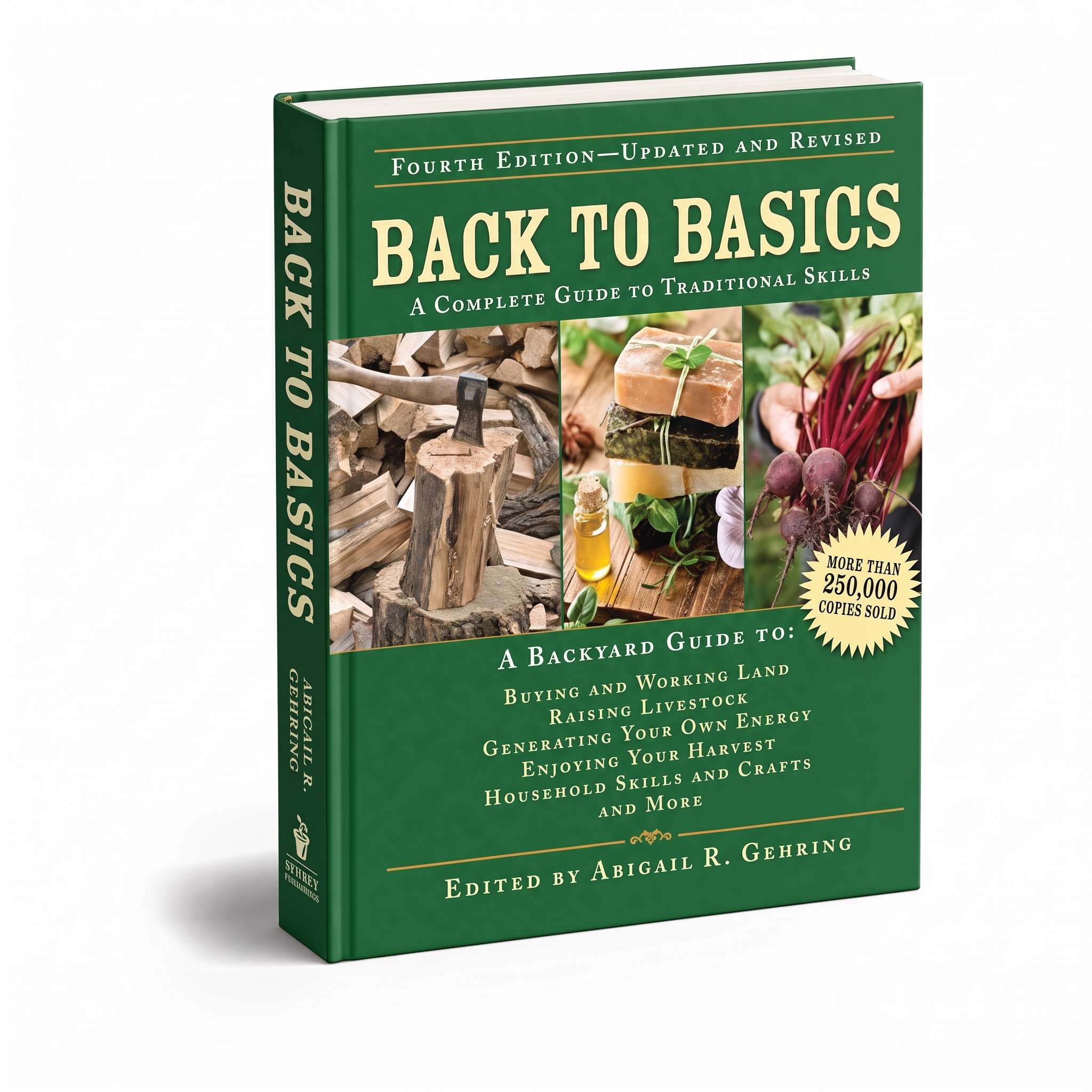
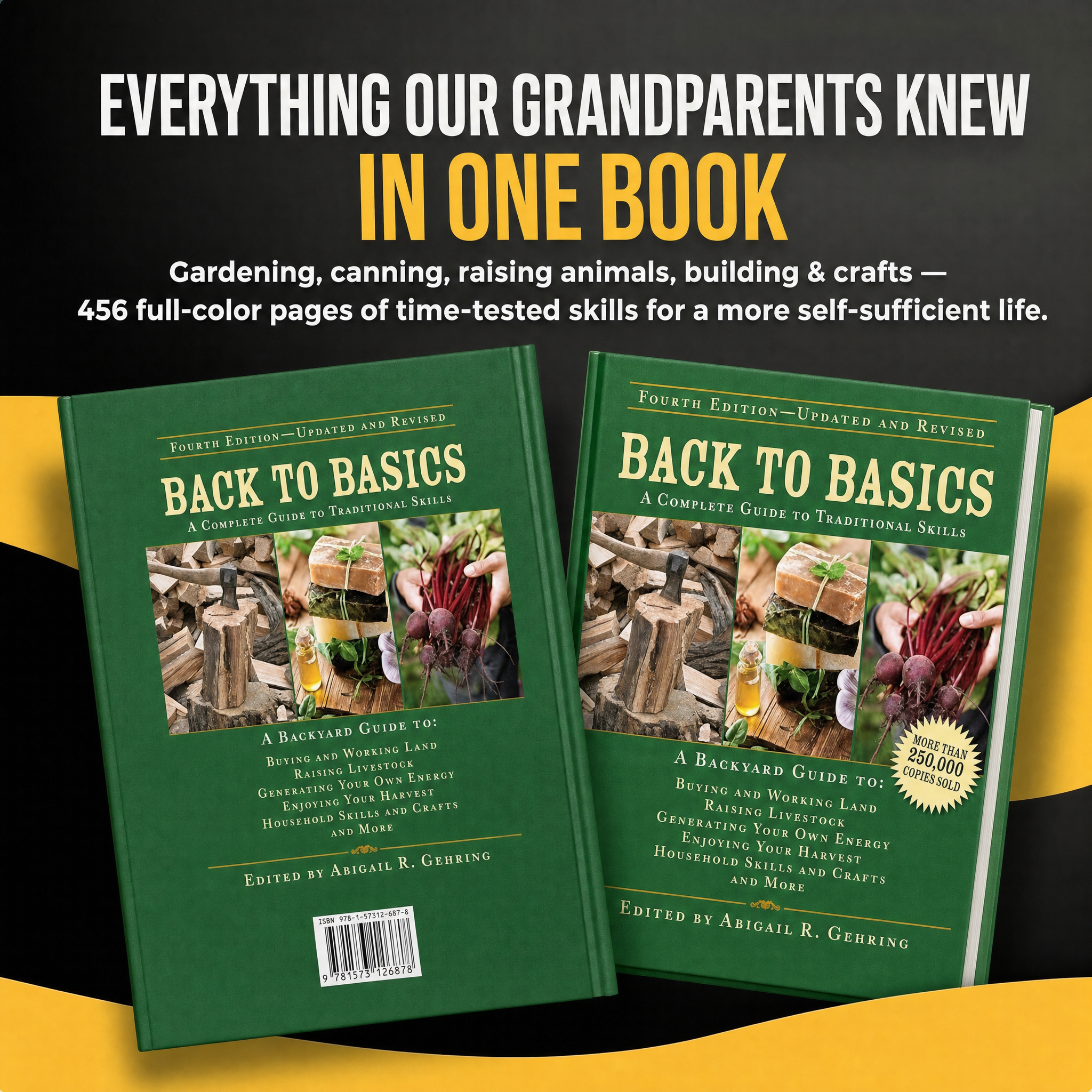
The last line on the list can sit on the same shelf as the flashlights. Back to Basics: A Complete Guide to Traditional Skills, 4th edition (Skyhorse, 2014), is a full-color hardcover of over 450 pages. It covers wood-fire cooking, canning and preserves, off-grid energy, gardening and livestock, taught step by step in photographs.
It descends from the Reader's Digest classic first published in 1981. There is no login, no update and no battery. Nothing has to charge or load, and the page you need is where you left it. It works the same in a blackout as it does on a sunny afternoon.
To be clear about what it is: this is a broad reference with pointers to go deeper, not a survival manual. It won't replace your supplies, and it isn't meant to. It sits next to them. Add it at the bottom of the list, and the list is finished.
THE LAST LINE ON THE LIST
The traditional skills that make supplies last, on paper, with no battery.


Back to Basics