Before You Buy Another Sleep Plan
4.6 Stars · 7,155 Amazon Ratings
The Average Baby
Every sleep method on the market is built around an average baby, tested on a sample and then written up as a universal timeline. The average is a real number, calculated across many different babies, and it describes none of them exactly. A method that works for the middle of a bell curve says nothing about either tail, and most babies are somewhere on a tail.
When a baby doesn't follow the method's schedule, the method's materials rarely explain that the average doesn't fit every case. Instead they offer troubleshooting steps, then a second edition, then a different method entirely, each one implying the previous attempt simply wasn't followed closely enough. The underlying chart stays the same book to book; only the cover and the chapter titles change.
The pattern repeats because the explanation on offer is always the same: try harder, follow more precisely, buy the next version. A parent cycling through four sleep plans in a year has not failed four times. Four plans built for an average baby have each missed the baby in front of them, and no fifth plan built the same way closes that gap.
The Trials
Randomized trials on sleep training, described in Cribsheet, measured something narrower than the promises printed on most course pages. Babies assigned to a sleep-training approach woke roughly two nights a week, compared with about four nights for babies who were not. Both gradual and faster approaches were tested, not one method held as the only option.
Two wake-ups a week instead of four is a real, measured effect, and it is also a modest one. It describes a trend across many families, not a guarantee for any single baby, and it leaves out exactly the long list of outcomes that sleep courses tend to promise alongside it.
Mothers' depression scores improved in the same trials, a finding the course pages rarely lead with. The research behind sleep training is smaller, calmer and more specific than the marketing built on top of it, and reading the trial itself is the fastest way to see where the promise and the data stop matching.
Five Years Later
One of the most common objections to sleep training is a worry about long-term harm to the parent-child bond. A randomized sleep-training study published in Pediatrics in 2012 followed its families for five years to check exactly that question, rather than stopping at the first few weeks like most research in this area.
At the five-year mark, the follow-up found no differences between the sleep-trained group and the comparison group in emotional or behavioral problems, in measured stress, or in closeness between parent and child. The groups that looked different at two months looked the same five years later.
A five-year follow-up is rare in parenting research, and this one answers the specific fear that keeps many parents from choosing sleep training, and the specific guilt that follows parents who do. The data describes what happened to real families over real years, not a theory about an outcome no one measured.
The Other Ledger
Sleep-training trials consistently showed improved depression scores among mothers in the sleep-trained group, a measurement that sits outside the baby's sleep log entirely. Parental wellbeing was tracked as its own outcome in this research, not as an afterthought to the baby's wake-up count.
The 2024 Owlet State of Parenting report found exhaustion to be the single most common emotion parents report in the first year, named by 61% of respondents, with parents losing about three hours of sleep a night on average during that stretch.
Parental stress earned its own federal advisory in 2024, when the US Surgeon General found that 48% of parents describe their stress as overwhelming most days. A parent's exhaustion is not a side effect to push through quietly. It is part of the same evidence sleep research already measures, which is why the trials tracked it directly instead of leaving it out.
The Last Purchase
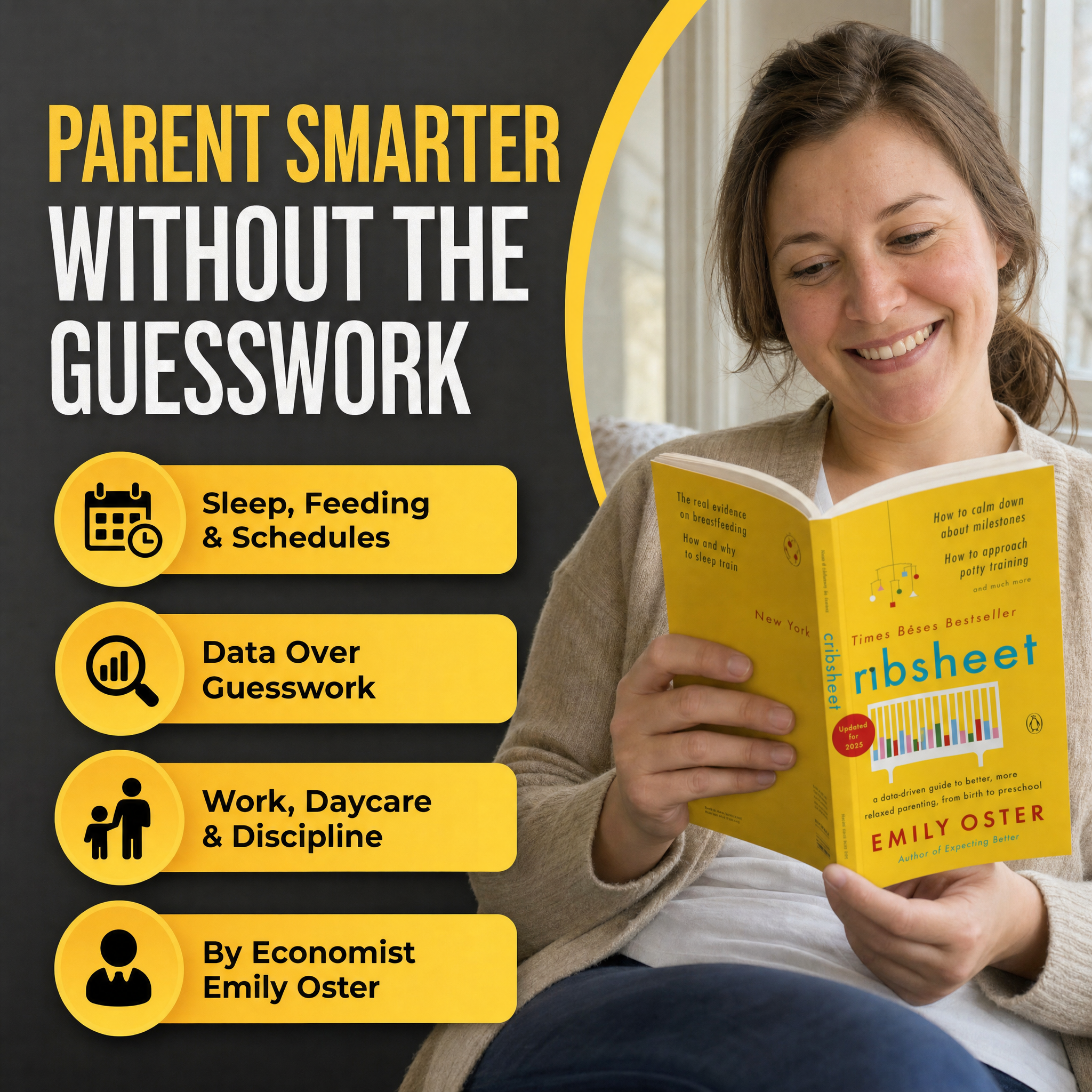
Cribsheet reviews the evidence behind sleep training alongside more than 30 other early-parenting decisions, each one ending in a short bottom line instead of a sales pitch for a follow-up product. The sleep chapter sits next to chapters on feeding, childcare and a dozen other choices, graded the same way.
The book does not instruct a reader to sleep-train, and it does not instruct her to avoid it. Some families read the trial data and choose the method. Some read the same data and choose not to, and the book treats both decisions as reasonable, because the research itself supports either choice depending on what a family wants.
A book bought once answers the question for every child who follows, including a second baby whose temperament turns out nothing like the first. No new sleep plan is needed when that happens, no new purchase — just the same evidence, read again.
The Method Was Written for a Baby Who Isn't Yours
Methods keep selling because each one fails some babies, and the parent blames herself and buys the next. Underneath all of them sits a smaller, calmer body of research: what was measured, how big the effect was, and what happened years later. Cribsheet lays it out and leaves the choice with you.
The Last Sleep Book
What the sleep trials, feeding studies and childcare research actually found


4.6 Stars · 7,155 Amazon Ratings
Get the Book →
Cribsheet