NOBODY IN YOUR FAMILY FARMED? NEITHER DID 42% OF HOMESTEADERS.
REASON 01
Scroll through any homestead feed and it can look like everyone else grew up with this. They talk about a grandmother's canning shelf and the barn a father built. You watch them work and start to think you showed up twenty years too late. That feeling is common, and it is mostly shaped by who ends up on camera.
In August 2026, Homesteaders of America published a survey of more than 4,000 homesteaders. Of those, 42% said there was no agricultural background in their family at all. The same survey found that 28% homestead on less than one acre.
So most of the people doing this right now are the first in their family to try. Not knowing how is the normal starting point. Nobody kept these skills from you on purpose. They simply skipped a generation or two, while parents worked their jobs and bought what they needed at the store.
REASON 02
A July 2026 Tractor Supply survey of 1,000 US adults asked homesteaders where they learn their skills. YouTube came first at 62%, just ahead of friends and family at 59%. For a lot of people, the person teaching them to build a raised bed is a stranger with a camera.
One at a time, those videos are often very good. The trouble starts after a video ends. The app picks what you watch next, and nothing picks what you learn next. A saved folder has no order, so chickens sit next to cheese, and cheese sits next to a cabin build.
Hundreds of saved videos and only a few finished projects is a pattern with a clear cause. Nobody handed you a sequence. That gap says nothing about your effort or your ability. It says the tool was built to keep you watching, which is a different job from teaching.
REASON 03
In January 2026, researchers published an analysis of 56 studies comparing reading on paper with reading on screens. Comprehension was better on paper when the screen required scrolling. With no scrolling needed, there was no reliable difference. The detail that matters is the scrolling.
As you scroll, you lose your sense of where something was. The step you needed is somewhere above the comments, or two swipes back. A printed page keeps its place. The instructions for step four are right where they were yesterday, halfway down the left side, next to the photo you remember.
That matters most in the kitchen and the shed. A book lies open flat on the counter while your hands are covered in flour or tomato. Nothing times out or autoplays into a different recipe. The photo for each step sits right next to the words, so you can check your work and keep going without wiping your hands first.
REASON 04
Most videos assume you already know the order of things. A fencing tutorial takes for granted that the water is in. The coop build you saved starts with land that someone already sorted out. Each one makes sense on its own, and none of them says what comes first.
The reference at the end of this list does it the other way around. It starts with choosing land and building, then works toward growing food, keeping animals, preserving and making. Each part sets up the next, so you are not guessing which skill to learn this season or which video to trust.
Order is where the real savings show up. Buy the chicks before the coop is finished and you get chicks in a bathtub, plus a few weekends of rushed carpentry. Knowing what comes first saves money and time. It also spares you the bad weekends that make people want to quit.
REASON 05
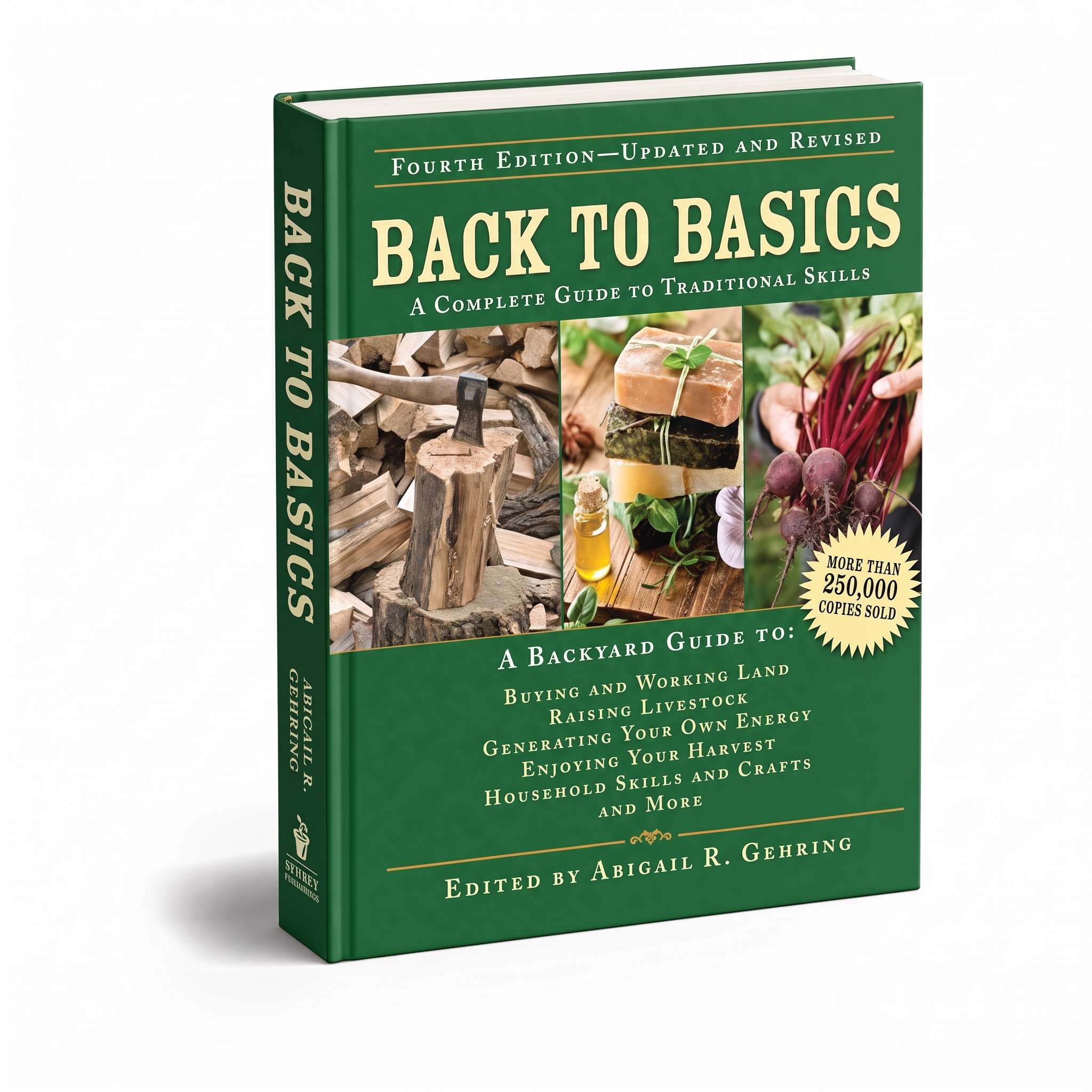
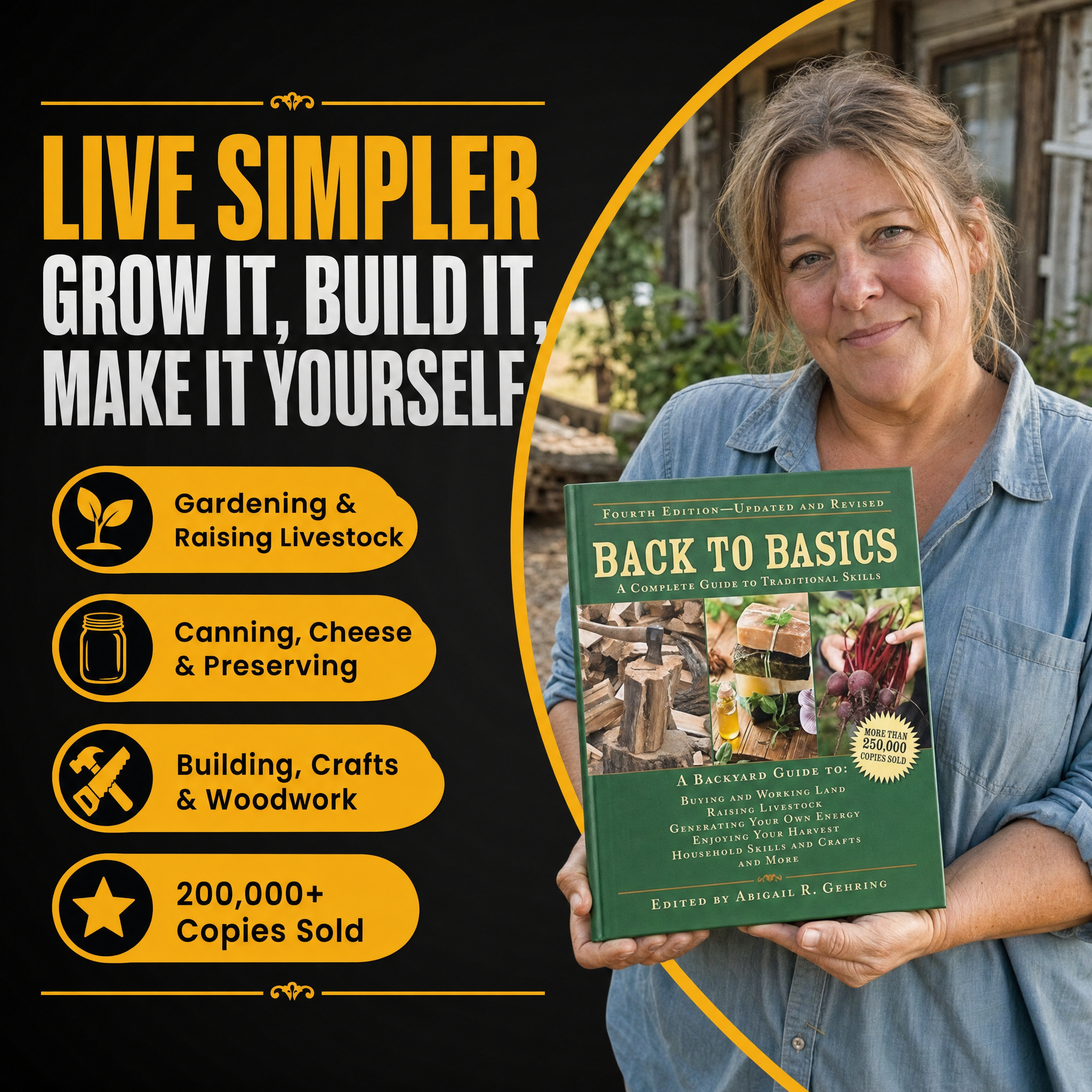
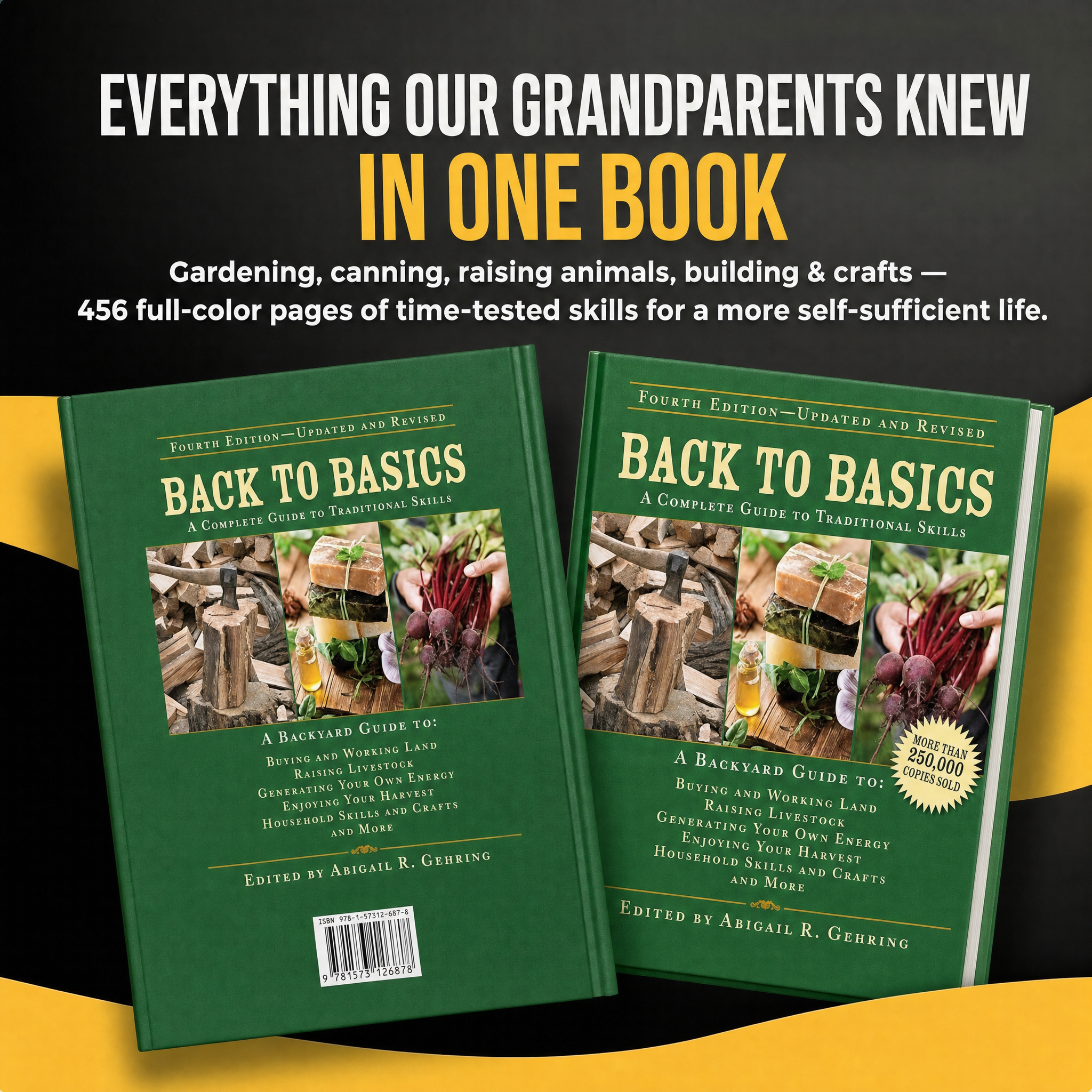
Some references are meant to outlast the phone you are reading this on. Back to Basics: A Complete Guide to Traditional Skills, 4th edition (Skyhorse, 2014), is a big full-color hardcover of over 450 pages. Hundreds of projects are taught step by step in photographs and illustrations, from land and building to gardening, livestock, wood-fire cooking, canning and cheese.
Its roots go back to the Reader's Digest classic first published in 1981. Many readers remember that book on a parent's shelf. This edition works the way the old one did. There is no app, account, update or battery.
To be fair about what it is: this is an overview. Most skills get a few pages, with pointers on where to go deeper. That is the point. It gives you the map and the order, and the deep dives come after, once you know which ones you need. For a first-generation homesteader, the order is the part that was missing.
THE BOOK THAT STARTS WITH THE LAND
A full-color guide to traditional skills, from choosing land to putting up preserves.


Back to Basics